
Topic
Recent scholarship in moral and political philosophy has shown renewed interest in moral progress. The idea of moral progress is that some changes in our societies and institutions can constitute nontrivial moral improvement. In other words, moral progress constitutes a change “that appears to be a transition to a state of affairs that is an improvement from a moral point of view” (Buchanan and Powell, 2018, p. 48). To illustrate, paradigmatic examples in the literature include the Suffragettes' movement and the recognition of women's rights, the legal abolition of slavery, the recognition of LGBTI+ rights, the establishment of democratic institutions, and greater concern for and better treatment of non-human animals.
Normative, descriptive, and causal questions arise in the philosophy of moral progress. An important normative question is how to distinguish moral progress from moral change. Moral change is any change that occurs which has moral characteristics. However, to recognize which moral changes constitute moral progress, we need to employ normative criteria. A portion of the debate in the philosophy of moral progress aims to identify these criteria. Some of the contenders in the literature are the expansion of rights, increases in well-being, the reduction of suffering, and the increasing recognition of moral equality.
If we are confident that moral progress occurs, an enticing causal question is how it happens. What are the mechanisms and drivers of these changes? Knowing the answers may help facilitate, protect, and advance progressive changes.
Additionally, how should moral progress be measured? What would be the indicators of progress, and on what timescale does it happen? Can moral progress be reversed, and how should we understand this resultant moral regress? What is the role of the individual vs. the role of social systems in accounting for moral progress? What are the differences between local and global moral progress, and how should we understand them?
The moral progress debate intersects with numerous other philosophical discussions in the fields of technology and AI, environmental ethics, animal rights, feminism, and global justice.
Our summer school will encompass debates about the normative criteria of moral progress, the empirical case for ongoing moral regress, the relationship between social identities and social norm change, and the relationship between technological and moral change. The summer school aims to provide a platform for students to present their work and receive feedback, as well as to engage with experts in a lively and productive discussion on these important issues.
Keynotes

Agnes Tam
University of Calgary
Explores how social groups and collective narration drive moral progress, and develops a new ethics of joint storytelling about who "we" are and can be.
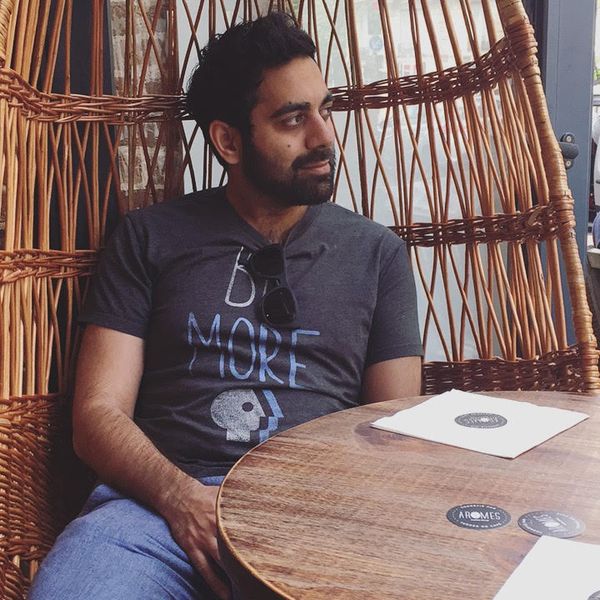
Victor Kumar
Boston University
Researches the intersection of science and moral philosophy, with a focus on human evolution, moral progress, and the cultural roots of political tribalism.

John Danaher
University of Galway
Works in legal philosophy and the ethics of emerging technologies, exploring what AI, automation, and robotics mean for the future of work and human flourishing.
Schedule
- 09:30 – 10:00 Arrival and reception
-
10:00 – 11:15
A growing body of work in moral progress takes norms as the proper level of analysis. Obstacles and pathways to moral progress are irreducible to individual cognition or institutional design but to social norms — shared expectations of mutual conformity to rules of conduct. Two influential models can be identified. The conventionalist model, by exposing the self-perpetuating logic of shared expectations, explains the stickiness of harmful practices. The pragmatist model, by modelling norms as social technology humans develop to resolve practical problems of associative living, explains progressive norm change via collective intelligent updating.
While broadly agreeing with the explanatory power of norms, I claim that the existing models are ill-equipped to explain the fragility of progress. This is not just a theoretical problem of progress but a worrisome political phenomenon. Across liberal-democratic societies, we are witnessing the collapse not of particular norms but of a system of them — trust, tolerance, solidarity, equality, non-violence. The conventionalist model explains stickiness, not fragility. The pragmatist model explains updating, not reversal. Neither explains the systematic nature of the collapse.
To explain the fragility of liberal-democratic norms, I propose a third model, which I call the narrative model. On this model, a significant class of norms are relational norms, namely role-expectations for members in a social relation emerging from a trajectory of interactions. Contra the conventionalist model, the force of the norm inheres not in the norm itself but in the intelligibility conferred by the narrative members tell about their trajectory. A norm is fragile when the story it is embedded in is fragile. Contra the pragmatist model, the momentum for change arises not from problem-identification but from disorientation about the roles or the telos of the story. And because of the part-whole logic of narrative, the disruption of one norm cascades into the collapse of others. Such narrativity of norm, I argue, makes sense of the fragility of liberal progress we are witnessing.
- 11:15 – 11:30 Coffee break
- 11:30 – 12:30
- 12:30 – 14:00 Lunch
- 14:00 – 14:30
- 14:30 – 15:00
- 09:30 – 10:00 Arrival and coffee
-
10:00 – 11:15
Humanity has enjoyed continuous progress over the last two centuries, yet regress is now a real possibility. Populist movements threaten to destroy the liberal democratic institutions that underpin social and technological progress. Arguably, these populist movements have been fueled by a technological assault on our intellectual capacities, from mass media to social media. An epistemic crisis is fostering a moral crisis.
In this talk I explore whether AI will make the problem better or worse. Contrary to much received wisdom, frontier models are reliable sources of information and offer valuable cognitive scaffolding. Yet AI also threatens to degrade human cognition as people offload more and more of their judgment and reasoning, potentially making them even more susceptible to populist demagogues. I'll argue that whether AI compounds or counters the epistemic crisis depends not on the technology itself but on the incentives shaping its use. Progress will depend on building educational and workplace institutions that incentivize cognitively enhancing rather than cognitively degrading uses of AI.
- 11:15 – 11:30 Coffee break
- 11:30 – 12:30
- 12:30 – 14:00 Lunch
- 14:00 – 14:30
- 14:30 – 15:00
- 15:00 – 15:30
- 19:00 Conference dinner, Zrno Bio Bistro
- 09:30 – 10:00 Arrival and coffee
-
10:00 – 11:15
This talk makes two contributions to the study of technology and moral change. First, it introduces the concept of the moral morphospace. This is the space of possible moral forms available to a society at a given time. The concept is borrowed and adapted from theoretical biology. In biology, the morphospace denotes the space of possible organismal forms, only some of which are ever actualised in nature due to physical, ecological or evolutionary constraints. Likewise, in morality, the morphospace denotes the space of possible moral forms that a given social system could adopt, only some of which are actualised due to a variety of constraints. Second, it advances a general thesis about the relationship between technology and moral morphospace. It argues that technology can loosen the constraints on moral morphospace, thereby acting as a catalyst for moral change. The talk develops this argument by way of three case studies, each involving transitions in projectile weapons technology: (i) the shift from spear and atlatl-based hunting to bow and arrow-based hunting; (ii) the shift from mounted knight to longbow-armed infantry in medieval Europe; and (iii) the shift from crewed aerial attack systems to uncrewed (and increasingly autonomous) drones in modern military forces.
- 11:15 – 11:30 Coffee break
- 11:30 – 12:30
- 12:30 – 14:00 Lunch
- 14:00 – 14:30
- 14:30 – 15:00
- 15:00 – 15:30
Zagreb Tips
Getting There
From the airport, take the bus line 290 to Kvaternikov trg or the Pleso Transport shuttle. Bolt and Uber are also available and are usually cheaper than local taxis.
Tram stop Zagrepčanka on Savska cesta (lines 4, 5, 14, 17) is just around the corner from the Institute. Tram stop Zagrepčanka on Ulica grada Vukovara (lines 2, 3, 5, 15) is right in front of the Institute. A 30-minute ticket costs €0.53, is validated on board, and can be bought on kiosks or via the Moj ZET app.
Accommodation
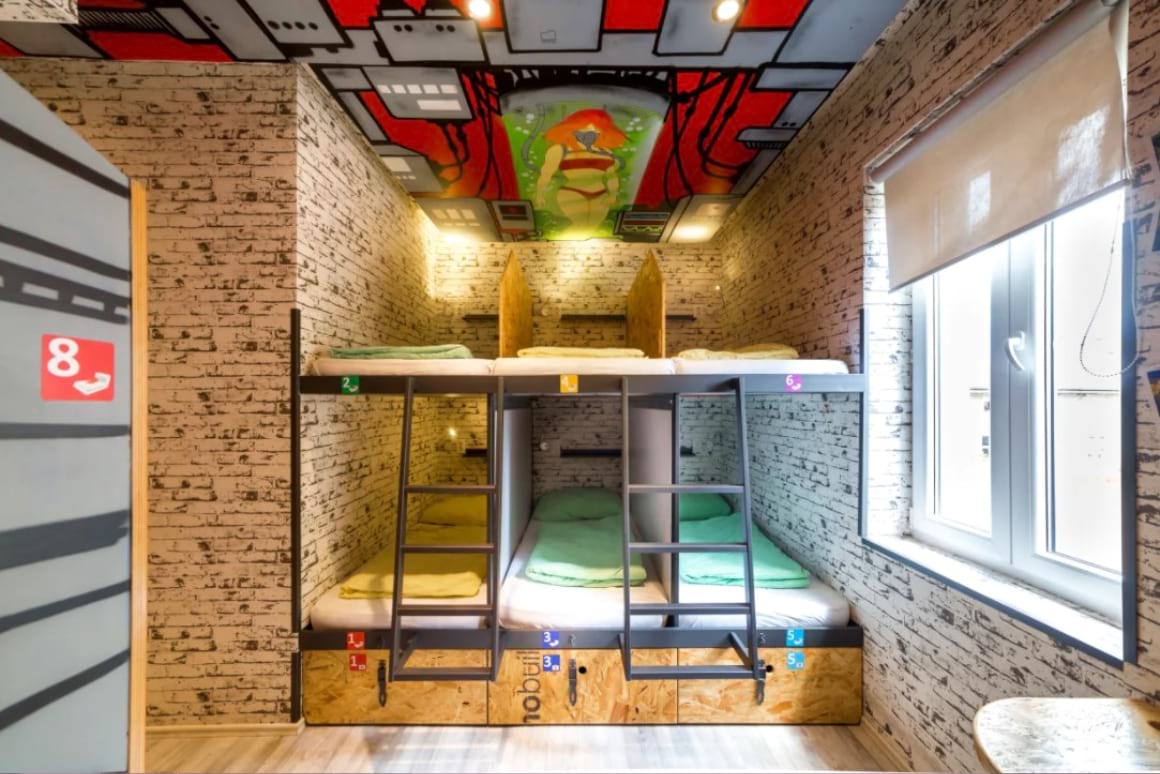
Chillout Hostel
A stylish and popular hostel in the city centre, a short tram ride from the Institute.
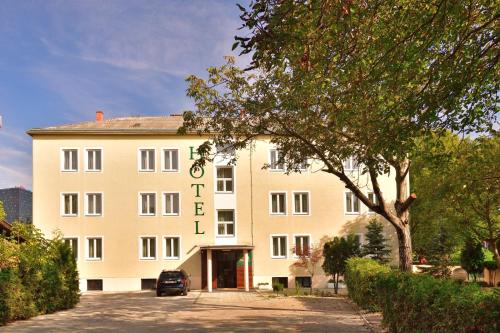
Hotel Orient
A three-star hotel near Vatroslav Lisinski Concert Hall, within walking distance of the Institute.
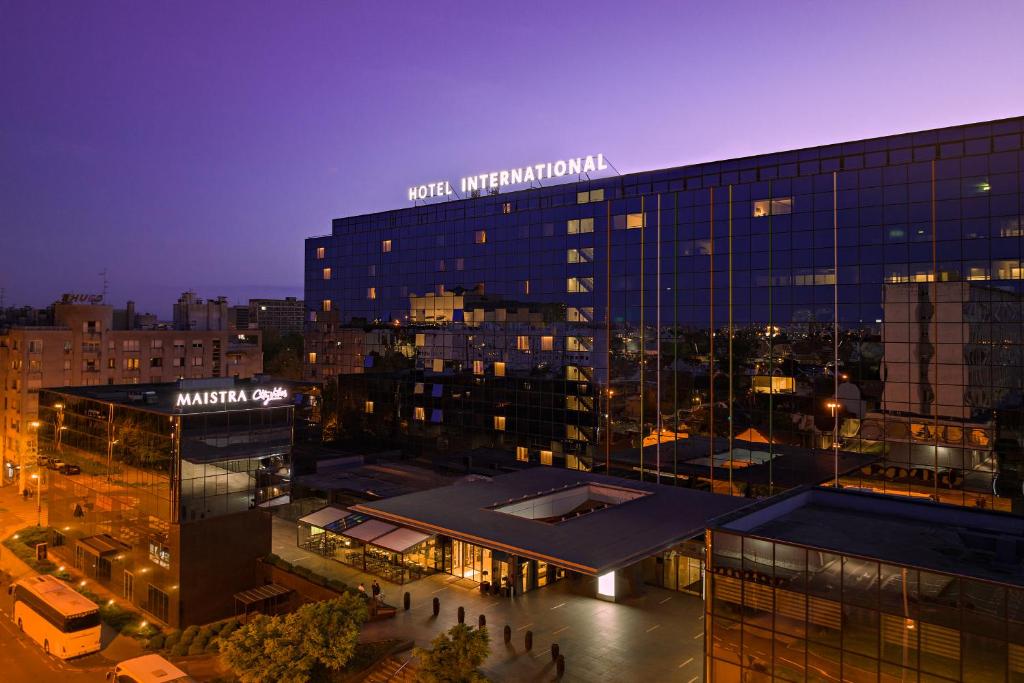
Food & Drink
Near the Institute
Near the City Centre
Sights
Zagreb is a compact, walkable city that rewards exploration. The historic Upper Town (Gornji grad) is the natural starting point: wander cobbled streets past the medieval Stone Gate, with a beloved shrine that, according to legend, survived the great fires of the 17th century, and the iconic St. Mark's Church, whose vivid tiled roof displays the coats of arms of Croatia and Zagreb. Climb the Lotrščak Tower for sweeping views over the city, and stroll the leafy Strossmayer Promenade, where locals have been taking their evening walks for over a century. Below, the Lower Town unfolds around a green horseshoe of parks and squares: Zrinjevac is perfect for a slow coffee, and the lively Dolac market, just off the main square, is unmissable on a weekday morning. Ban Jelačić Square is the beating heart of the city, good for orientation, people-watching, and meeting up at any hour. For museums, the Museum of Broken Relationships is a genuinely moving and internationally acclaimed institution, while the Croatian Museum of Naive Art offers a distinctive window into a uniquely Croatian artistic tradition. If you have a spare afternoon, the Mirogoj cemetery, one of the most architecturally beautiful in Europe, is a peaceful and striking escape, and the parkland at Maksimir offers greenery, walking paths, and Zagreb's modest but charming zoo.
Contact
This Summer School is supported by the Institute of Philosophy in Zagreb, and by the Croatian Science Foundation-funded projects Moral Progress: Individual and Collective, Artificial Intelligence, Autonomy and Justice, and Ethics and Social Challenges.
Organising committee: Mia Biturajac, Charlie Blunden, Petar Bodlović, Nino Kadić, Marco Tassella, Monika Zeba.
For further inquiries, please email mbiturajac@ifzg.hr.